 The Tiny Cart
How to Set Up a Toy Rotation System That Actually Makes Cleanup Easier
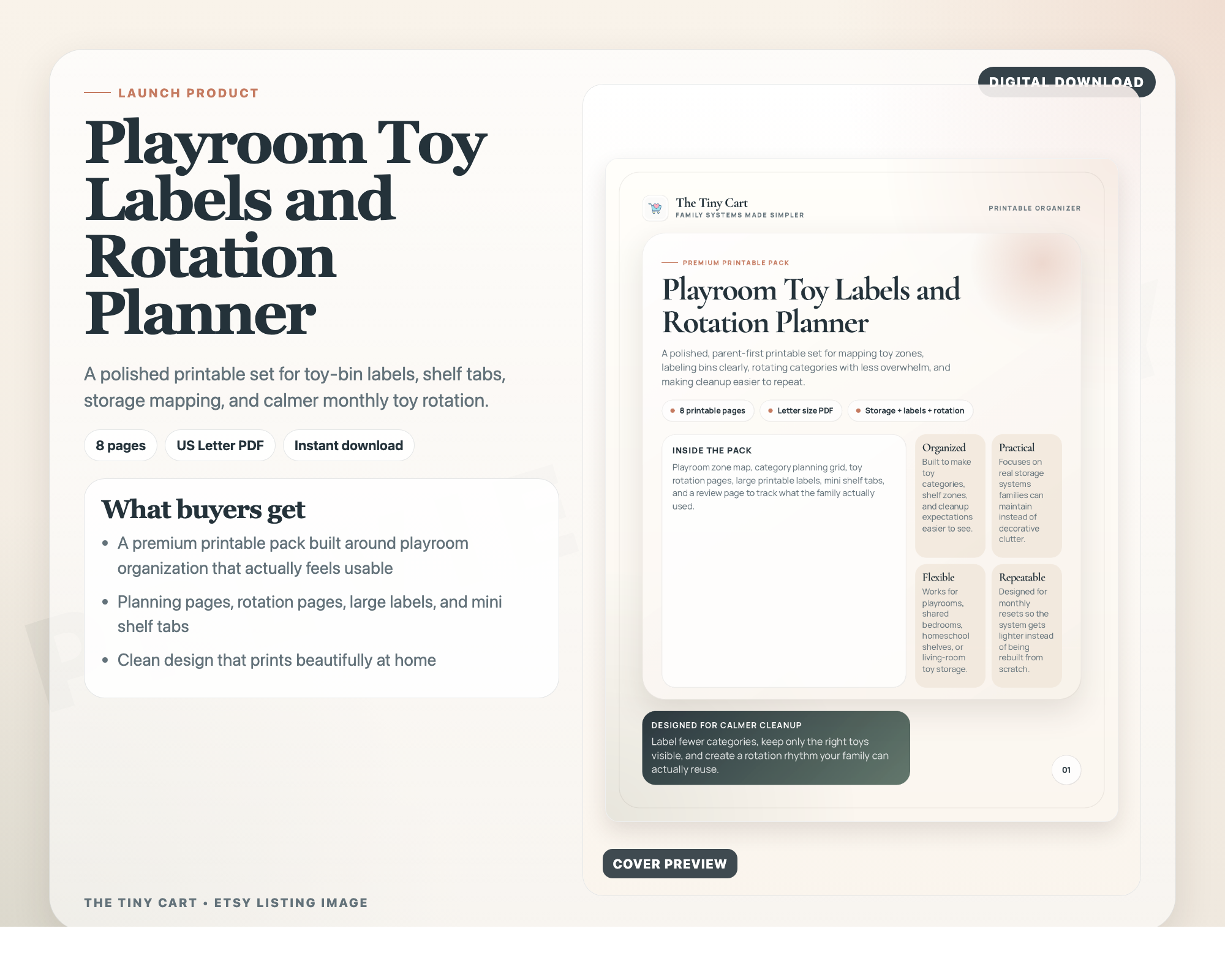
A toy rotation system is only helpful if it lowers the amount of cleanup and decision fatigue in the room. If it creates a giant maintenance project, it will not last.
Why Toy Rotation Feels Good in Theory but Fails in Practice
- The categories are too specific. Parents create bins that only make sense during the setup phase.
- Too much stays out. Rotation does not work if the active zone still looks like everything.
- No labels match real cleanup language. If the label says “building manipulatives,” nobody uses it.
- There is no rule for what gets rotated back in.
A Simpler Rotation System
1. Start with broad, real-life categories
Blocks. Art. Pretend play. Cars. Books. Puzzles. Sensory. Those categories hold up better than a hyper-detailed shelf taxonomy.
2. Decide what stays out by limit, not by guilt
Pick how many bins or shelves stay active. Once that limit is full, something has to leave before something else comes in.
3. Label for the child and the parent
Good labels make cleanup language obvious. They also make it easier for adults, grandparents, babysitters, and older siblings to reset the room the same way.
4. Treat rotation as a reset, not a constant project
You do not need to rotate toys every three days. Most families do well with a slower rhythm that happens when interest fades, clutter rises, or cleanup starts taking too long.
What a Good Rotation Plan Usually Includes
- A category planning grid before labels are printed
- Simple bin labels that match the real categories
- A short reset checklist for what to keep, store, or swap
If the plan makes cleanup instructions shorter, it is working. If it adds more thinking, it needs to get simpler.
Matching Printable: Playroom Toy Labels and Rotation Planner
This pack gives you category mapping, printable labels, and a reset structure so the system feels easier to maintain after the first cleanup burst.
See the printable →The Goal Is Fewer Decisions
Toy rotation works best when it reduces choice overload for everyone in the room: the child choosing what to play with, the parent deciding what stays out, and the adult resetting the space later.
You are not trying to build the world’s most beautiful playroom label system. You are trying to build a room that can recover from Tuesday.