 The Tiny Cart
How to Make Weekly Meal Planning Actually Stick for Busy Families
Most family meal plans do not fail because parents are lazy. They fail because the plan is too separate from real life.
A dinner calendar by itself does not solve school lunches, grocery decisions, prep fatigue, picky-eater repetition, or the moment when Wednesday arrives and nobody wants what was originally planned. If you want a meal plan that actually sticks, it has to work as a weekly rhythm, not a perfect spreadsheet.
Why So Many Meal Plans Fall Apart Midweek
- They plan seven ideal dinners instead of five realistic ones.
- They treat lunches like a separate problem. Then parents still make lunch decisions every night.
- They skip the grocery flow. A plan without a usable list still creates store stress.
- They do not leave room for leftovers, low-energy nights, or backup meals.
The fix is not more complexity. It is choosing a smaller system that connects dinners, lunches, shopping, and prep.
A Simpler Weekly Meal Planning System
1. Pick anchor dinners, not a full fantasy menu
Start with the five meals that matter most. Leave at least one night for leftovers and one night for something flexible. If your week gets messy, the plan still holds.
2. Repeat lunches on purpose
Most families do better with repeatable lunch patterns than with novelty. One sandwich day, one snack-board day, one thermos day, one leftovers day, one easy backup day is often enough.
3. Build the grocery list around the meals, not the store wander
Once dinners and lunch repeats are set, move directly into the shopping flow. Group by produce, protein, pantry, dairy, freezer, and household extras so the plan turns into an actual cart faster.
4. Prep only the leverage points
Do not aim for a full Sunday marathon. Wash fruit, portion snacks, prep one protein, and decide what lunch components are worth repeating. Small prep wins are what make the plan reusable.
What Helps Families Keep Going After Week One
- Tracking favorite meals so you are not inventing from scratch every week.
- Knowing what flopped so you can stop buying ingredients for meals nobody wants repeated.
- Planning around real energy instead of aspirational cooking moods.
That is why the best meal planning systems are not just meal calendars. They need a place for lunch repetition, grocery categories, prep notes, and a record of what actually worked.
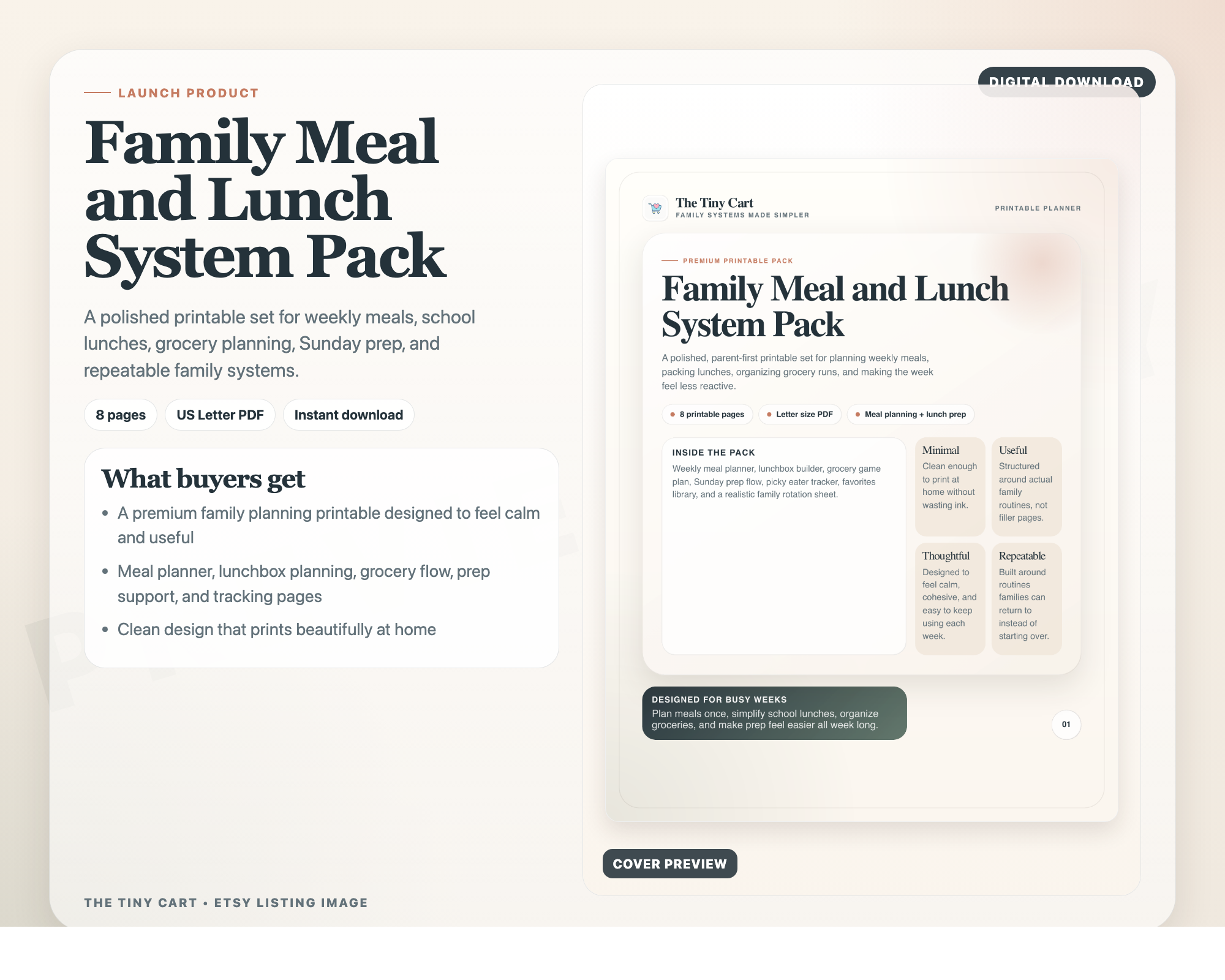
Matching Printable: Family Meal and Lunch System Pack
If you want a calmer system for weekly meals, school lunches, grocery flow, Sunday prep, and repeatable favorites, this is the printable we built around that exact job.
See the printable →Keep the Plan Small Enough to Repeat
The goal is not to become a person who meal preps twelve mason jars on Sunday and never misses a beat. The goal is to make family food feel less reactive.
If your plan helps you answer these four questions faster, it is working:
- What are we eating for dinner?
- What are the lunch repeats this week?
- What do we actually need to buy?
- What should we repeat next week because it worked?
That is enough to cut a surprising amount of stress out of weekday food decisions.