 The Tiny Cart
How to Build an After-School Routine for Kids That Actually Works
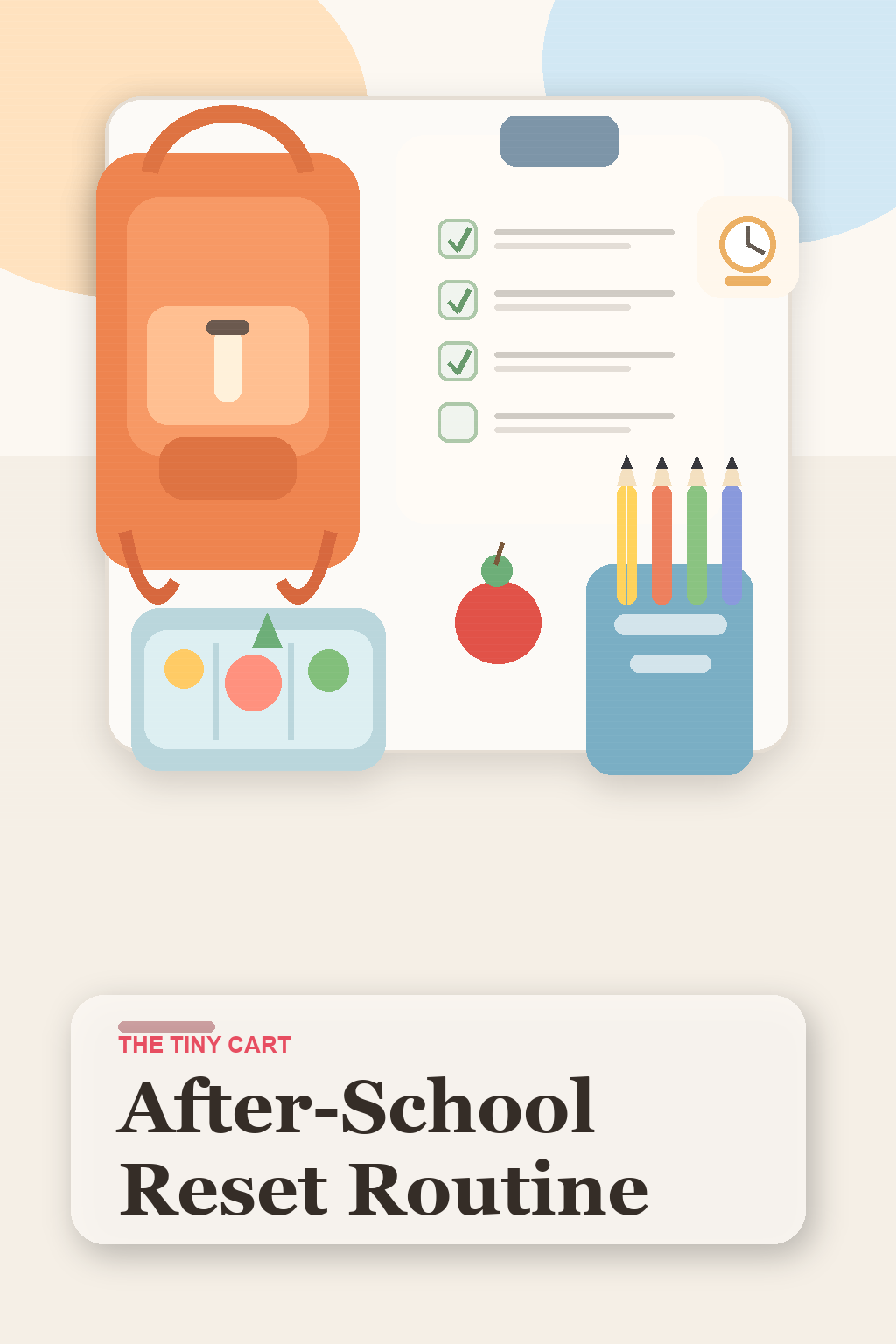
The first twenty minutes after school decide whether the rest of the evening feels manageable or like a slow-motion pileup. Shoes land in one room, papers disappear into backpacks, someone is suddenly starving, and homework cannot start because the table is still covered in breakfast crumbs.
A strong after-school routine does not need to be strict. It just needs to make the next step obvious enough that kids can move through it without a parent narrating every transition.
Why After-School Routines Fall Apart
- Everything hits at once. Hunger, tiredness, papers, and homework all arrive in the same ten-minute stretch.
- There is no landing zone. Lunchboxes, folders, and water bottles end up wherever the child stops walking.
- The first task is too vague. “Go do homework” is not specific enough when a child still needs a snack, a pencil, and a clear place to sit.
- The routine lives inside the parent. If the order is invisible, kids wait for instructions instead of following a sequence.
Build the Routine in Four Stops
1. Start with a drop zone
Before snack, before homework, before anyone disappears into the couch, create one obvious place for the backpack, lunchbox, shoes, and take-home papers. This can be a hook rail, one bin, and one paper tray by the door. The goal is not a Pinterest-perfect mudroom. The goal is stopping the school-day clutter from spreading into the whole house.
If your family needs a visible wall-level reminder for forms, activities, or dinner plans, pair the landing zone with one of the systems from our guide to the best dry erase calendars and wall organizers for family command centers.
2. Keep snack predictable
After-school snack should be easy enough that it does not become a second decision-making marathon. Keep one small set of parent-chosen options ready to grab, and store portion cups or reusable containers nearby so the kitchen does not turn into a scavenger hunt.
The easiest setup is usually one snack bin plus a short list of repeat choices. If you want the gear side dialed in, our roundup of the best snack containers for kids helps with cups, lidded containers, and other repeatable grab-and-go options.
3. Make homework easy to begin
Most homework resistance is not only about motivation. It is often friction. Kids sit down and then realize the pencils are elsewhere, the worksheet is still in the backpack, and the charger disappeared two days ago.
Even if homework happens at the kitchen table, one portable caddy and one paper sorter can remove most of that friction. Our guide to the best kids desk organizers for homework stations is a good place to start if this part of the afternoon keeps stalling.
4. End with a two-minute reset
The most important step usually happens after homework: put the folder back, refill the water bottle if needed, return the library book, and make tomorrow morning easier on purpose. Families skip this because it feels small, but it is the step that prevents the next day from starting in a scramble.
A short reset also keeps the after-school routine from becoming a one-way slide into evening chaos. The afternoon should close cleanly enough that bedtime does not have to absorb all the unfinished admin.
Make the Sequence Visible
This is where a digital tool can help. We built Little Routines so families can turn a fuzzy afternoon into a visible checklist: snack, empty backpack, homework, reading, reset desk, prep for tomorrow. When kids can see the sequence, they need fewer spoken reminders and more often move to the next step on their own.
If you want the full walkthrough, read our Little Routines guide. It explains how visual schedules, timers, and kid-friendly checklists fit into real family life without expecting perfect behavior or a giant wall chart.
Wall Hook Rail With Mail Slots
A simple landing-zone anchor for backpacks, permission slips, and one parent catchall instead of six random surfaces.
Shop Hook Rails →Clear Snack Bin Set
Useful for keeping the after-school snack choices visible, limited, and fast to restock instead of buried behind pantry clutter.
Shop Snack Bins →Portable Homework Supply Caddy
Ideal for kitchen-table homework or shared family spaces where pencils, scissors, and glue cannot live out all day.
Shop Homework Caddies →Visual Timer for Homework Blocks
Useful when a child does better with a visible “work first, then free time” boundary instead of a vague request to focus.
Shop Visual Timers →Keep the Routine Small Enough to Repeat
The best after-school routine is not the most ambitious one. It is the one your family can repeat on an ordinary Wednesday. One drop zone, one snack rhythm, one homework start, one reset step. That is enough structure to calm the afternoon without turning the whole house into a management system.
If you want to make the flow more independent over time, move the sequence out of your voice and into something visible. That is the real shift. Once kids can see what happens next, the routine starts belonging to them too.